A campaign generates 500 conversions. Google says paid search drove them. Meta claims credit for many of the same conversions. Your CRM tells a different story altogether. So which channel actually influenced the outcome?
This is the challenge modern marketers face. As customer journeys become more fragmented and privacy changes limit visibility into user behavior, traditional reporting can no longer provide a complete picture of performance. Organizations need more than dashboards that explain what happened. They need measurement frameworks that reveal what actually drove results and what actions to take next.
Why is Marketing Measurement Entering a New Era?
For years, marketers relied on reports to understand performance. Dashboards showed clicks, impressions, conversions, and attributed revenue. They answered an important question: what happened?
Today’s environment requires a different question: what actually drove results, and what should we do next?
That shift is fueling a new era of measurement. Advances in artificial intelligence, privacy regulations, browser restrictions, and signal loss are pushing marketers beyond traditional attribution models. Instead of focusing solely on historical performance, modern measurement combines multiple methodologies to identify causal impact, improve data quality, and predict future outcomes.
At the same time, marketing budgets remain under increasing scrutiny. As organizations invest more in digital advertising, leadership teams expect clearer answers about performance and return on investment. That pressure is accelerating the adoption of privacy-safe measurement approaches such as enhanced conversions, server-side tracking, incrementality testing, and marketing mix modeling.
What’s the Difference Between Reporting and Measurement?
Many organizations use these terms interchangeably, but they aren’t the same. Reporting tells you what happened. Measurement helps explain why it happened.
A dashboard might show that conversions increased 20%. Measurement seeks to determine which channels, campaigns, audiences, and creative assets contributed to that growth, and whether those results would have happened anyway.
This distinction matters more as customer journeys grow more complex. A single conversion may involve multiple devices, channels, platforms, and touchpoints before a customer takes action. Reporting focuses on activity. Measurement focuses on impact.
The most sophisticated marketers are shifting from descriptive metrics toward predictive insights that guide future investment decisions.
Why is Last-Click Attribution No Longer Enough?
For years, last-click attribution served as the default measurement model for digital advertising. The concept is simple: credit the final interaction before conversion. The problem is that customer journeys rarely work that way.
A customer might discover a brand through connected TV, engage with social content, search for the company weeks later, click a paid search ad, and finally convert through an email campaign. Last-click attribution assigns all credit to the final email, while ignoring every touchpoint that influenced the decision.
As privacy changes reduce visibility into user-level tracking, the limitations of attribution-only measurement become even more apparent. Organizations that rely exclusively on attribution models often overinvest in lower-funnel channels, undervalue awareness campaigns, misallocate budgets, and miss incremental growth opportunities.
The result is a distorted view of performance that can lead to poor strategic decisions. To build a more complete understanding of marketing impact, organizations first need to strengthen the quality of the data that fuels their measurement efforts.
How Do Enhanced Conversions Improve Measurement Accuracy?
Signal loss has become one of the biggest challenges marketers face. Signal loss occurs when platforms can no longer connect user actions, such as clicks, form fills, or purchases, to advertising campaigns. Browser restrictions, cookie deprecation, ad blockers, operating system privacy updates, and consent requirements have all reduced the amount of data available for traditional tracking methods. As a result, marketers may underreport conversions, lose visibility into customer journeys, and make decisions based on incomplete information.
Enhanced conversions help recover some of those missing signals while supporting privacy-safe measurement practices. They use consented first-party customer information, such as an email address collected during a form submission or purchase, to improve conversion matching between advertisers and advertising platforms. The data is securely hashed before being transmitted, allowing platforms to better connect conversion events to ad interactions without exposing personal information.
By improving conversion matching, enhanced conversions help marketers recover attribution data that might otherwise be lost. The result is more accurate conversion reporting, stronger audience matching, improved campaign optimization, and better measurement across devices. For organizations investing heavily in paid media, enhanced conversions provide a critical foundation for modern measurement.
The Case for Server-Side Tracking
Client-side tracking has long been the standard for collecting website and conversion data. But browser restrictions and ad blockers increasingly limit how well it works. Server-side tracking offers a more resilient alternative.
Instead of relying solely on a visitor’s browser to transmit data, server-side implementations process and send information through secure server environments.
This approach improves data accuracy, reduces signal loss, strengthens privacy compliance, and provides greater control over customer data. As organizations work to future-proof their measurement strategies, server-side tracking is quickly becoming a foundational piece of modern marketing infrastructure.
More complete data leads to better optimization. Better optimization leads to better business outcomes. But data quality alone doesn’t explain how marketing investments contribute to business growth.
That’s where broader measurement frameworks become increasingly valuable.
What is Marketing Mix Modeling and Why is It Making a Comeback?
Many marketers think of marketing mix modeling (MMM) as a legacy approach. In reality, it’s becoming one of the most important tools in modern advertising.
Marketing mix modeling analyzes historical business and marketing data to estimate how different factors contribute to outcomes such as sales, revenue, leads, or customer acquisition. Unlike attribution models that focus on individual users, MMM evaluates broader patterns across channels and time periods.
It can help marketers understand how much revenue a channel generates, the impact of upper-funnel investments such as connected TV, where budgets should shift next quarter, and which channels produce the strongest return on investment.
Recent advances in artificial intelligence and automation have dramatically reduced the time required to build and update these models. What once took months can often be completed in days, allowing marketers to make informed decisions faster than ever.
While marketing mix modeling provides a broader view of channel contribution, it doesn’t always answer one critical question: Did marketing activity actually cause the outcome?
To answer that, organizations are increasingly turning to incrementality testing.
How Does Incrementality Testing Reveal What Actually Works?
One of the biggest challenges in measurement is separating correlation from causation. Just because a customer converted after seeing an ad doesn’t mean the ad caused the conversion.
Incrementality testing addresses that challenge directly. Rather than asking who converted, it asks whether the conversion would have happened without the marketing activity. By comparing exposed and unexposed audiences, marketers can identify the true lift generated by campaigns.
These insights help organizations measure causal impact, validate channel effectiveness, uncover wasted spend, improve budget allocation decisions, and strengthen executive confidence in reported results.
As marketers seek greater accountability and more accurate performance insights, incrementality testing is becoming a critical complement to attribution models and marketing mix modeling.
How Are AI and Predictive Measurement Changing Decision-Making?
The most significant shift in measurement today isn’t simply better reporting. It’s moving from retrospective analysis to forward-looking decision-making.
For years, measurement has focused on explaining past performance. Modern measurement frameworks are designed to do more. By combining high-quality data, attribution, incrementality testing, marketing mix modeling, and predictive analytics, marketers can gain a clearer view of both current performance and future opportunities.
This allows organizations to make faster, more informed decisions about budgets, channels, and campaign strategy. Instead of waiting for reports to explain what happened last month, marketers can use measurement to guide what happens next.
The goal is no longer just to understand the past. It’s to make better decisions about the future.
What Does a Modern Digital Advertising Measurement Strategy Look Like?
The strongest measurement frameworks no longer rely on a single methodology. Instead, they combine multiple approaches to build a more complete picture of performance.
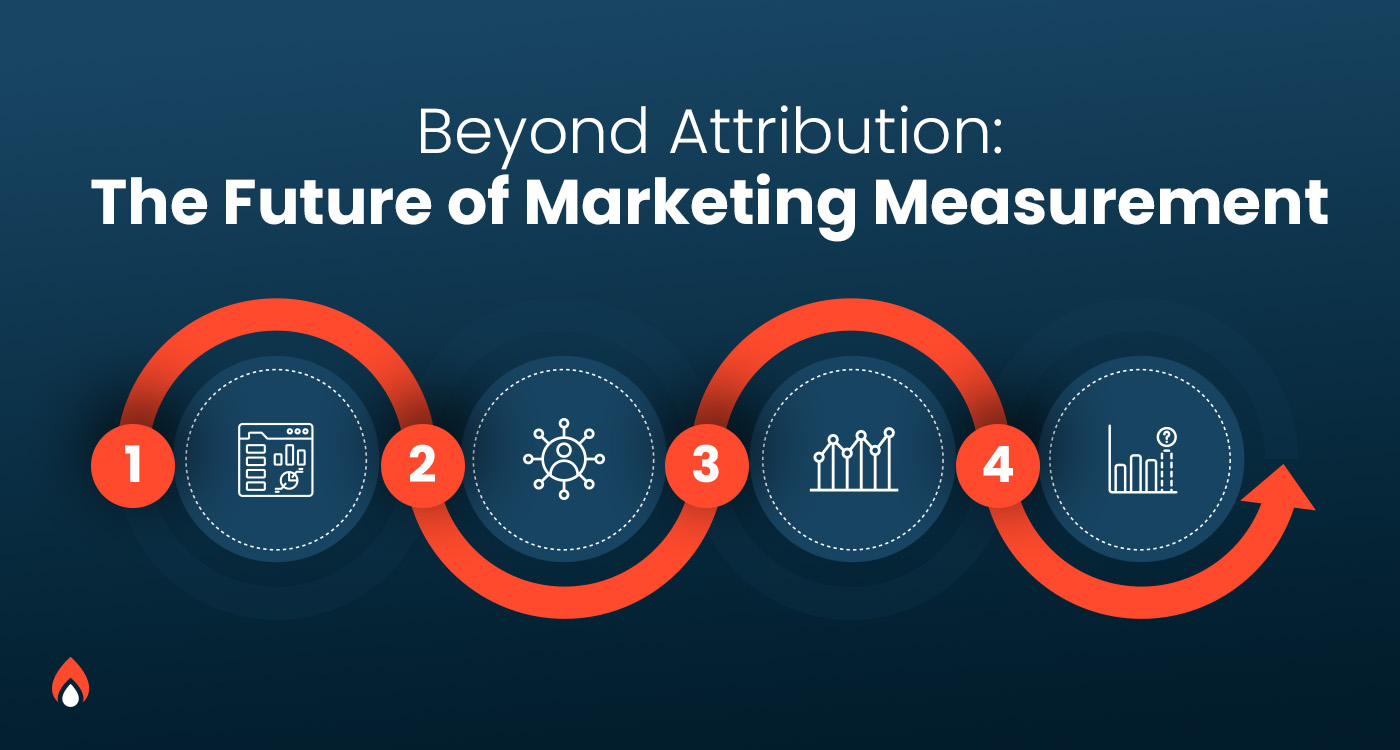
Each methodology solves a different challenge. Enhanced conversions and server-side tracking improve signal quality. Attribution models help explain customer journeys. Marketing mix modeling provides a broader view of channel contribution. Incrementality testing validates causal impact. Predictive analytics helps forecast future performance.
A modern measurement strategy typically includes:
- Enhanced conversions to improve signal quality and conversion accuracy.
- Server-side tracking to preserve data integrity and support privacy-safe measurement.
- Attribution models to understand customer journeys and channel interactions.
- Incrementality testing to determine causal impact and validate performance.
- Marketing mix modeling to evaluate overall channel contribution and guide budget planning.
- Predictive analytics to forecast outcomes and support future decision-making.
Together, these approaches provide a more reliable view of performance than any single framework alone.
How Can Organizations Prepare for the Predictive Era of Measurement?
Organizations don’t need to rebuild their entire measurement infrastructure overnight. But they should start evaluating whether their current approach can answer the questions business leaders increasingly ask:
- What’s driving revenue growth?
- Which investments are creating incremental value?
- Where should budgets shift next quarter?
- What’s likely to happen next?
The organizations gaining an advantage aren’t necessarily collecting more data than everyone else. They’re measuring more intelligently. That means strengthening data quality, embracing privacy-safe tracking methods, adopting incrementality testing, and incorporating predictive measurement frameworks that move beyond attribution alone.
Putting It All Together
Marketing measurement is evolving from retrospective reporting into forward-looking intelligence. Enhanced conversions improve data quality. Server-side tracking preserves critical signals. Marketing mix modeling reveals channel impact. Incrementality testing uncovers causal performance. AI brings these elements together to help marketers predict future outcomes with greater confidence.
The question is no longer whether your reporting is accurate. The question is whether your measurement strategy can tell you what to do next.
Building that capability requires more than implementing new tools. Organizations need the right combination of technology, data strategy, and expertise to connect these methodologies into a unified view of performance.
That’s where AdCellerant comes in. By combining actionable market intelligence with expert enablement services, we empower our partners to move beyond standard reporting. Gain the confidence needed to make smarter investment decisions and ensure better advertiser outcomes
Ready to modernize your measurement strategy? See how AdCellerant helps marketers move beyond reporting and gain the insights needed to make smarter, faster decisions. Book a demo with AdCellerant.