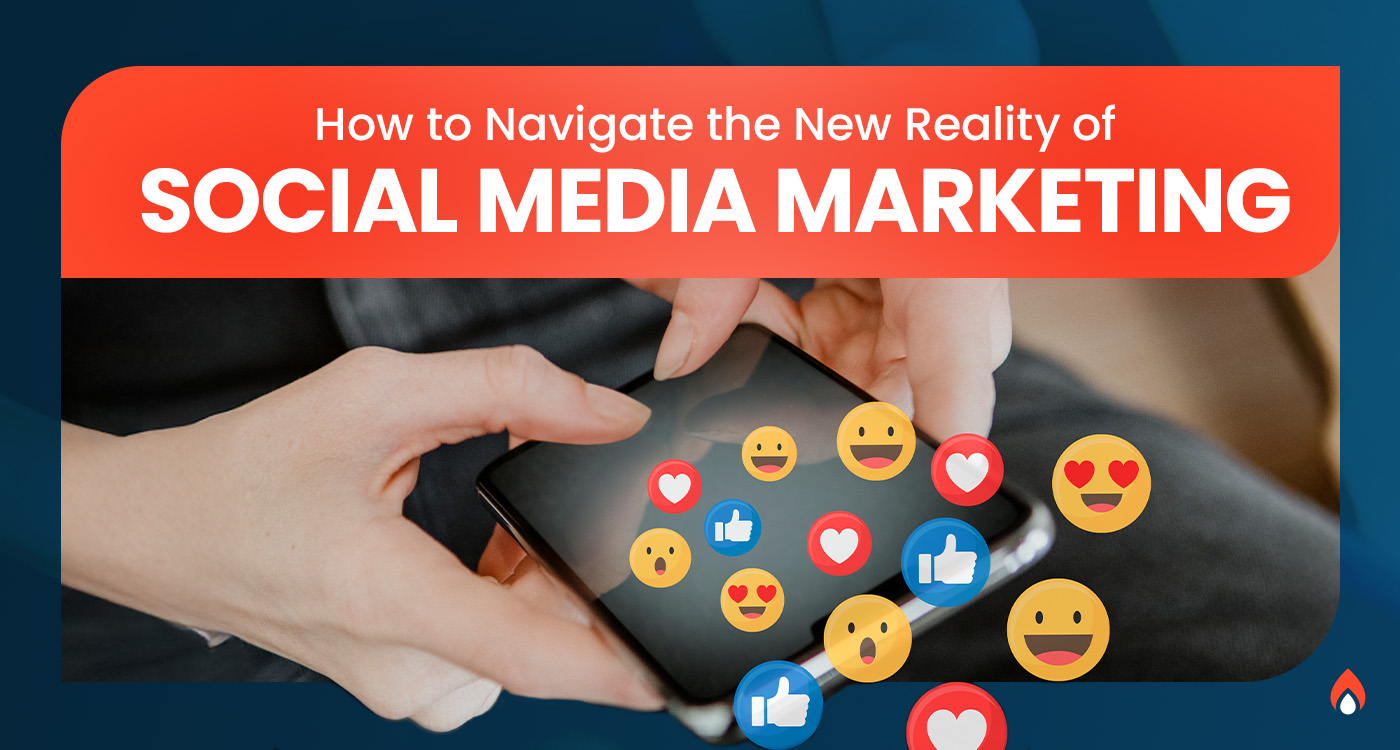
Marketing leaders are facing a new reality: the effort required to maintain social media visibility has decoupled from the results it delivers. You can increase your production frequency, double down on high-quality creative, and follow every platform’s best practices, yet still hit the same plateau.
In an environment where every dollar must be tied to a business outcome, relying on traditional distribution is no longer viable. This old “broadcast” model, sending the same generic message to a wide audience and hoping for the best, cannot compete with precision-targeted content that speaks to a customer’s specific needs.
Growth through organic channels alone has effectively hit a ceiling. Brands now compete within a digital stream saturated with “industrial scale” AI content. Experts suggest nearly 90% of online contentwill be AI-generated by the end of this year. With AI-assisted visuals making up 20% of social feeds, your brand is competing against a volume of synthetic noise that human teams cannot match through sheer output.
Brands must use predictive analytics to cut through digital noise. Without paid reach, your brand remains nearly invisible to new prospects. But reach alone is a vanity metric; if you fail to maintain human authenticity on your social platforms, you pay the premium of becoming ignored.
Successful generative strategies bridge this gap, ensuring your investment buys engagement rather than just impressions by using AI-driven insights to tailor hyper-personalized narratives that resonate with each sub-audience’s specific values. This approach ensures that every dollar spent on visibility is anchored by content that feels earned and intentional.
What is Organic Social Media?
Organic social media refers to the content you post for free to your followers. While many brands still use it to try to find new customers, its role has evolved. Today, organic social is like your research lab.
Because you aren’t paying for distribution, organic posts are the best way to test which messages actually resonate with your audience. It is the place for human, “low-fi” content—like behind-the-scenes footage or direct insights from your leadership team. This type of content builds trust and demonstrates your brand’s authenticity. If a post performs well organically without any financial backing, you have discovered a “spark,” or a message that truly connects.
How Can Brands Use Organic Content for Market Research?
Strategic brands have shifted their perspective on organic social media. Rather than viewing it as a primary awareness tool, they use it as a cost-effective “research lab.” Instead of risking a quarterly budget on a single campaign, use AI to generate and test multiple variations of a concept. This allows your team to identify which hooks and value propositions resonate in real time before committing significant ad spend.
A predictive content strategy identifies what works in your industry before you spend a dollar amplifying it. This is critical because authenticity is the only remaining hedge against AI saturation.While AI provides efficiency, 55 percent of audiencesreport “AI fatigue.” Human-first content, such as raw behind-the-scenes footage or direct-to-camera executive insights, earns 8.7 timeshigher engagement than polished, synthetic corporate ads.
Why is Organic Reach Declining?
The period of reliable organic distribution for brands has ended. Average organic reach for brand posts on Meta platforms now ranges from 2.6 percent to 5.9 percent.Follower counts, once a primary metric for marketing success, have become a vanity metric. On social platforms, established brands have seen organic reach plummetby as much as 60% since 2024.
This transition occurred as platforms moved from social graphs (showing content from people you follow) to interest graphs (showing content an AI predicts you will engage with). Your target decision-makers are unlikely to see your content unless a social listening AI determines that the post is globally relevant to their specific professional interests.
What is Paid Social Media Used For?
If organic content is the spark, paid social media is the firework. While organic content builds trust with your existing community, paid social is how you reach everyone else. It allows you to target specific decision-makers based on their job titles, interests, and professional behaviors.
The benefit of paid social is predictability. You aren’t waiting for an algorithm to “pick up” your post; you are purchasing a guaranteed seat in front of your target audience. It takes the “winners” from your organic lab and ensures they’re seen by the people most likely to do business with you.
What are the 3 Steps for Paid and Organic Social Media to Work Together?
A successful strategy uses organic content to validate ideas and paid budget to amplify them. Instead of guessing which ad will perform best, you look at your organic data. When a specific post sees a spike in engagement, you move it into your paid channel.
- Step 1: Use organic posts to test multiple hooks, headlines, and visuals with your core audience.
- Step 2: Identify the top 10% of posts that earned the most genuine engagement.
- Step 3: Use your paid budget to put those proven winners in front of a much larger, targeted audience.
The data show this partnership works: prospects who see both organic and paid content from a brand are 61% more likelyto convert than those who see only ads.
How Do You Optimize Paid Social Ad Spend with AI?
With organic reach at record lows, global social ad spend is expected to reach $124.8 billionthis year. For B2B organizations, “pay to play” is the only consistent gateway to new decision-makers.
AI trend forecasting now allows brands to identify underperforming campaigns before they drain the budget. Marketers using AI for predictive ad spend optimization see a 42% reduction in costper acquisition (CPA).
The most effective brands use a hybrid model, allocating 30-45%of their social budget to amplify the top 10%of their organic performers. This approach turns a proven organic spark into a controlled, high-conversion paid campaign.
What are the Most Important Social Media Statistics?
Scaling a brand requires a data-driven approach to every post. Keep these figures in mind for your next performance review:
- Reach is limited. Fewer than 80 out of every 1,000 followerswill see your brand’s organic posts.
- Social is the New Search.For 64% of small businesses, social media has replaced traditional search engines as the primary driver of web traffic.
- The Power of Organic and Paid. Prospects exposed to organic and paid content are 61% more likely to convertthan those who only see ads.
- Video Dominates.Short-form video engagement is 70% higherthan any other format.
- Personalization Wins.Ninety-three percent of shoppers will return to brandsthat use AI for deep, real-time personalization and sentiment analysis.
How to Lead the Conversation Instead of Chasing the Algorithm
Social platforms have shifted. They no longer just show content to your followers; they use AI to predict what users want to see. This change makes the “old way” of posting a direct path to invisibility. To succeed now, you must balance human authenticity with smart, data-driven distribution.
You’ve done the hard work of building a brand. We handle the complexity of reaching your customers. AdCellerant cuts through the digital noise, ensuring your marketing budget drives real growth instead of empty views.Schedule a consultationwith our team today to learn how we sync your paid and organic efforts for maximum impact.