For years, marketers chased third-party audiences. They rented data, bought segments, and relied on platforms to fill the gaps. That model is disappearing. Today, the most valuable data in marketing isn’t something you buy—it’s something you already own.
The Most Valuable Marketing Asset You Already Own
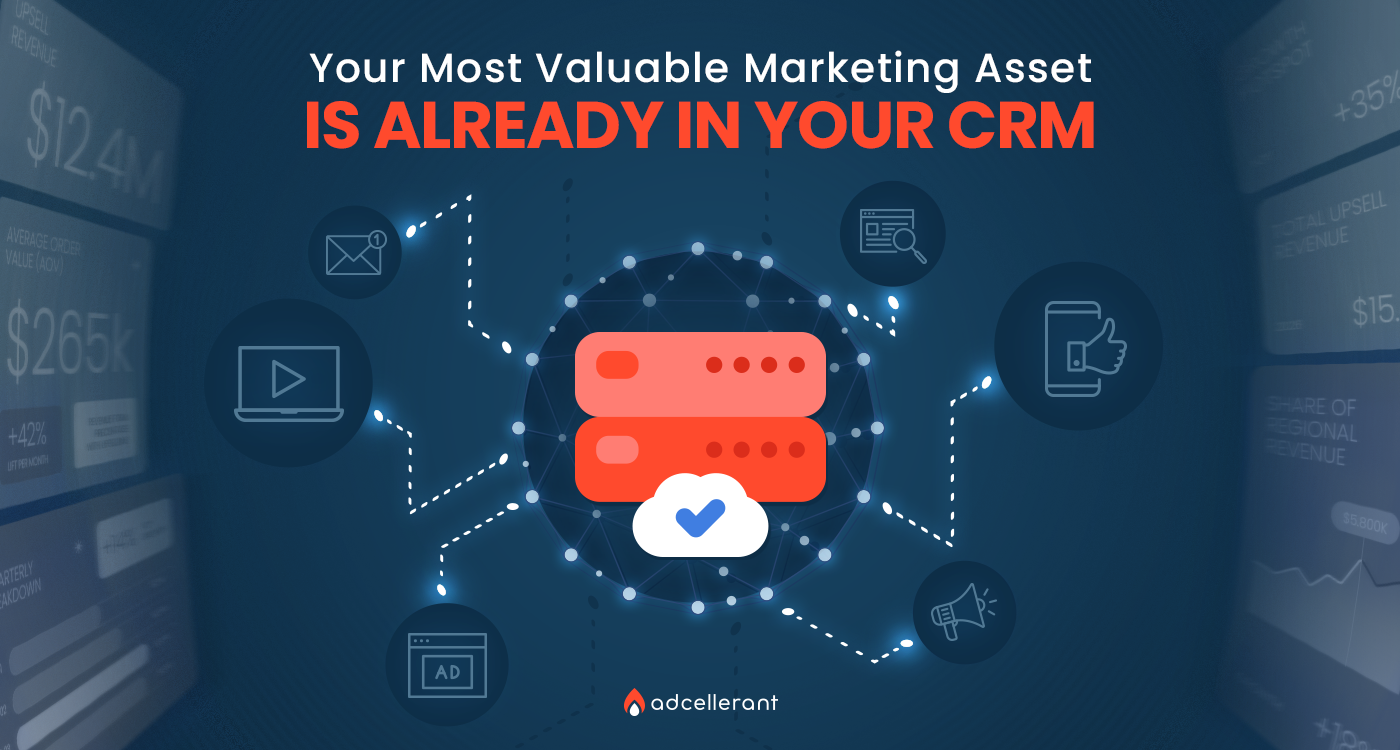
Your customer relationship management (CRM) platform is a record of every customer interaction, purchase, form submission, and sales conversion. It’s a competitive advantage your competitors can’t buy or replicate.
Most organizations have years of valuable customer intelligence sitting inside disconnected CRM systems, spreadsheets, and marketing platforms, and it’s not being leveraged in their digital marketing campaigns. As a result, 77% of marketers are actively investing in first-party data strategies to improve audience targeting, personalization, and measurement. The organizations gaining a competitive advantage aren’t collecting more data. They’re finding better ways to activate the data they already have.
The organizations winning in modern advertising aren’t collecting more data than everyone else. They’re activating the data they already have. This blog explains how first-party data activation works, why CRM data has become the foundation of modern advertising, and how marketers can turn existing customer records into measurable business growth.
What is First-Party Data Activation, and Why Does it Matter?
First-party data is the information you collect directly from your customers and prospects: CRM records, website behavior, purchase history, loyalty program activity, email engagement, and lead-generation forms. It comes from relationships your business already has, not from a data broker.
Activation is the step most organizations skip. Activation means taking those records out of the CRM and using them to build advertising audiences, improve targeting, personalize messaging, suppress existing customers from acquisition campaigns, and sharpen attribution.
For a long time, most digital advertising was built on third-party audiences, cookie-based targeting, and broad demographic segments. This once successful foundation is eroding. Privacy regulations, browser restrictions, and platform data limitations have steadily reduced what marketers can see and do with third-party signals.
Research from eMarketer shows 62% of brand marketers expect first-party data to become even more important over the next two years. The question isn’t whether this matters; it’s whether your organization is ready.
Why Is CRM Data Valuable in Digital Marketing
Third-party data was convenient. It offered scale without the overhead of managing customer relationships directly. But convenience came with tradeoffs: limited accuracy, shared audiences, and growing legal exposure.
Your CRM data is different. It contains real customers, real purchase history, real engagement signals, and real revenue data–information tied to actual relationships your business has built. No one else has access to this. Competitors can’t purchase it. And because it’s collected with consent, it’s permission-based by design.
The advertising landscape has reinforced this value. eMarketer identifies first-party data and contextual targeting as the leading strategies advertisers are adopting to maintain the effectiveness of their targeting. B2B marketers are increasingly prioritizing first-party data due to growing privacy regulations and concerns about data quality with purchased audiences. And according to eMarketer analyst Evelyn Mitchell-Wolf, over a third of U.S. browsers already block third-party cookies by default, and that share is growing.
What Happens When CRM Data Doesn’t Get Used?
Here’s what’s common: a CRM full of years of customer interactions sitting completely disconnected from the advertising platforms running a campaign. Sales and marketing data live in separate silos. Audience segments are outdated. Records are incomplete or duplicated. And no one has a clear picture of the customer journey.
The consequences show up in campaign performance. Ad spend targets prospects who are already customers. Lookalike audiences are built from incomplete or low-quality seed data. Conversion rates suffer because messaging doesn’t match where customers are in the buying journey. Acquisition campaigns drive up cost per lead without the guardrails that good audience data provides.
Many organizations are data-rich and insight-poor. They have years of customer intelligence, but it’s not connected to the systems that drive daily media decisions.
How Does First-Party Data Enrichment Improve Advertising Performance?
Enrichment means adding valuable signals to CRM records, making them more actionable. Enrichment can include demographics, household information, purchase-intent signals, behavioral data, geographic insights, and, for B2B marketers, firmographic attributes such as company size, industry, and technology stack.
A CRM record with only a name and email address provides limited targeting value. That same record, enriched with customer lifetime value, lifecycle stage, purchase propensity, and product interests, becomes a foundation for highly efficient media buying.
The benefits are concrete: better audience segmentation based on actual customer attributes, higher match rates when uploading lists to advertising platforms, more relevant messaging tied to customers’ buying journey stages, and improved personalization across channels.
How Can You Use CRM Data For Digital Advertising?
Once your data is clean and enriched, the use cases for activation are substantial.
- Customer Match Audiences. Upload your existing customer and high-value prospect lists directly to platforms for precise targeting. These audiences match your known contacts to platform user profiles, giving you a level of targeting accuracy that purchased audiences can’t deliver.
- Lookalike Modeling. Use your best customers–highest revenue, longest retention, strongest engagement–as seeds for lookalike audiences. The output is prospecting that mirrors your actual best buyers rather than generic demographic categories.
- Customer Exclusion. Suppress existing customers from acquisition campaigns. This reduces wasted spend, prevents overlap between acquisition and retention messaging, and improves the overall efficiency of your media budget.
- Suppress Existing Customers From Acquisition Campaigns. This reduces wasted spend, prevents overlap between acquisition and retention messaging, and improves the overall efficiency of your media budget.
- Cross-Sell and Upsell Campaigns. Target customers who purchased one product with advertising for a complementary one. CRM data makes this straightforward because you know exactly what each customer has and what they don’t.
- Lifecycle Marketing. Segment by where customers are in their relationship with your brand: new, active, lapsed, or high-value. Each segment deserves a different message and a different media strategy.
- Omnichannel Activation. First-party audiences can be activated across Display, Social Media, Connected TV, Programmatic, and retail media. The same customer data that powers your email program can power your paid media, creating a consistent experience across every channel. U.S. retail media ad spend is projected to reach $71.09 billion in 2026, driven largely by the unique value of authenticated first-party audiences and verified shopper data. That’s a signal about where the industry is placing its bets.
What Does A Cookieless Targeting Strategy Look Like?
Google’s timeline on cookie deprecation has evolved, but the broader privacy shift hasn’t reversed. Safari and Firefox have blocked third-party cookies by default for years. Consent requirements, ad blockers, and browser tracking protections continue to erode third-party quality across the board.
The marketers treating this as a temporary pause are taking on unnecessary risk. Research from Epsilon shows that 69% of advertisers believe the deprecation of third-party cookies will have a greater impact on digital advertising than major privacy regulations like the GDPR and CCPA. The infrastructure shift is happening regardless of any individual platform’s timeline.
A modern privacy-first advertising strategy combines CRM activation and first-party audience creation with identity resolution to connect customer touchpoints across devices; data clean rooms for privacy-safe collaboration; contextual targeting as a channel-level signal; retail media audiences built on verified first-party shopper data; and customer-based measurement tied to real business outcomes.
What Does Successful First-Party Data Activation Look Like?
Getting from CRM records to campaign performance isn’t a single step. Here’s what the process looks like in practice.
- Centralize Customer Data. Pull records from your CRM, website, marketing automation platform, and sales systems into a unified view. If your data is stored in separate locations, activation is impossible.
- Clean and Standardize. Deduplicate records, validate contact information, and establish data governance standards. Garbage in, garbage out applies here more than anywhere else in marketing.
- Enrich Customer Profiles. Add attributes that make your data more actionable, including value scores, intent signals, lifecycle stage, behavioral attributes, and firmographic data for B2B audiences.
- Build Audience Segments. Create segments based on lifecycle stage, customer value, behavioral signals, and product affinity. Each segment should map to a specific campaign objective and message.
- Activate Across Channels. Push your audiences into paid search, paid social, programmatic, CTV, and retail media. The same data layer should power all of them.
- Measure Business Outcomes. Move beyond the clicks and impressions. Measure revenue generated, pipeline influenced, customer acquisition cost, and lifetime value. First-party data allows you to connect advertising to actual business performance.
How Are Brands Turning CRM Data into Revenue Growth?
Many organizations already have valuable customer and prospect data sitting inside their CRM. The difference between collecting data and generating results comes down to activation.
Consider a recent university campaign that used first-party data to re-engage a highly qualified alumni audience eligible for a new grant program. Rather than relying on broad demographic targeting, the campaign activated an existing audience list to deliver highly relevant messaging directly to the individuals most likely to take action.
The results: 303 post-view conversions, 326 post-click conversions, and a 0.29% click-through rate, all of which outperformed typical display advertising benchmarks.
The campaign demonstrates a simple but important principle: when marketers activate known audiences rather than targeting broad segments, advertising becomes more efficient and more effective. Relevance improves. Waste decreases. Outcomes become attributable.
Is Your Customer Data Working as Hard as Your Media Budget?
The next generation of advertising won’t be built on borrowed audiences. It will be built on customer relationships.
The brands gaining a competitive advantage today aren’t collecting more data than everyone else. They’re activating it more effectively. Your CRM already contains the signals, insights, and customer intelligence needed to improve targeting, increase efficiency, and drive growth.
See how your existing customer data can become a competitive advantage with our First-Party Data solution by booking a demo with our team.